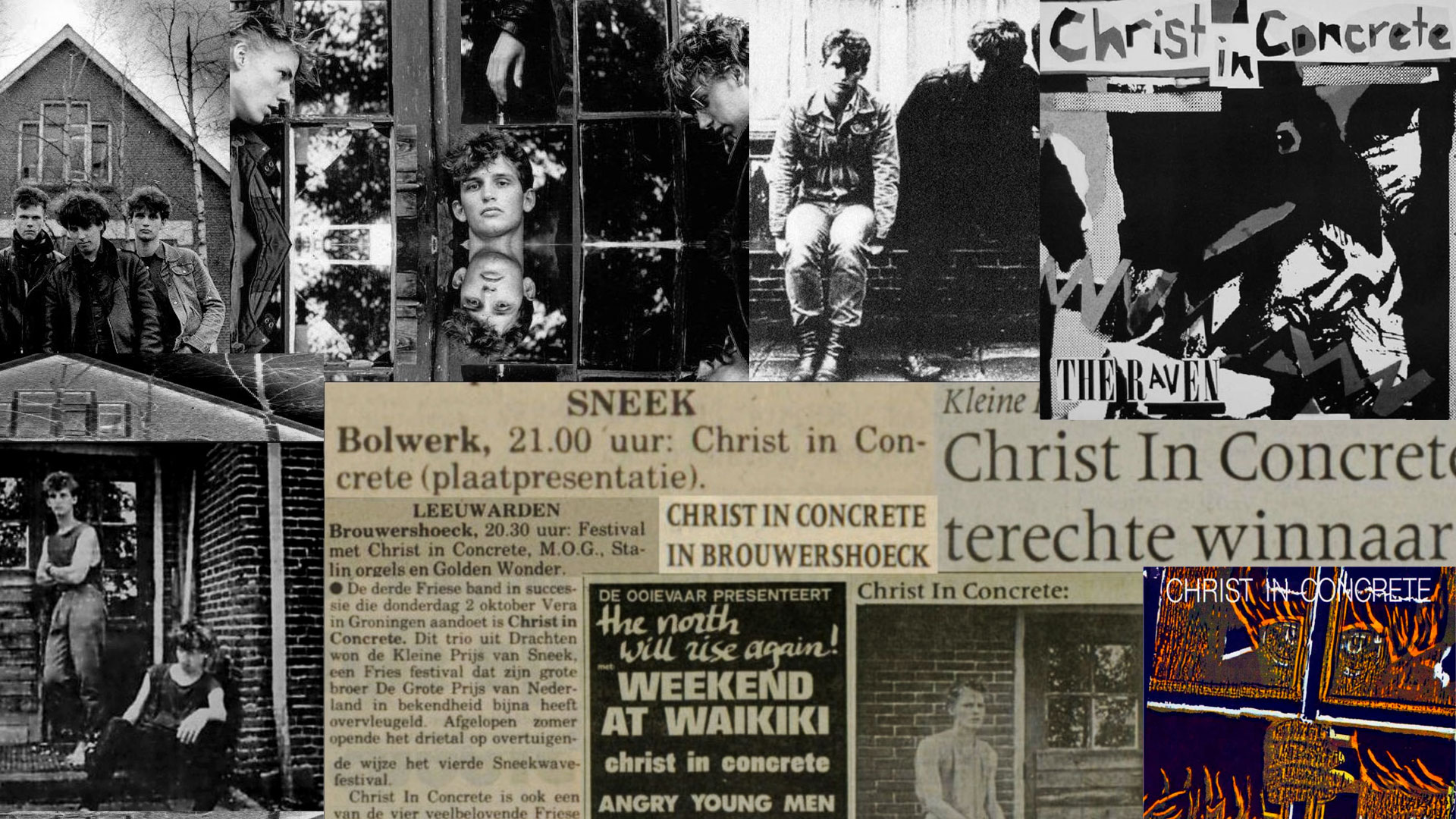
Christ in Concrete was formed in the mid-eighties. A young band with a sound that both grates and resonates: raw, melodic, and unmistakably unique. Their breakthrough came in 1986, winning the Kleine Prijs van Sneek (Small Prize of Sneek). They shared the Sneekwave festival with The Fall and The Ramones. This speaks volumes about the spirit of the times and the confidence Christ in Concrete already enjoyed at the time.
The music navigates between gritty fuzz and melancholic melodies, with an underlying tension that never quite dissolves yet remains disarmingly melodic. Influences from The Jesus and Mary Chain and Hüsker Dü are audible, but they are not copied: Christ in Concrete pours them into a Northern Dutch mold. This is evident on the uncompromising debut Future Men (1986) and the fierce, unvarnished live album The Raven (1987).
During those years, the band grew into one of the figureheads of the so-called “Frisian Breeze”: a loose affiliation of young, loud guitar bands that shook up the northern music scene. Christ in Concrete distinguished itself with a layered guitar sound, deep undertones, and melodies that were simultaneously menacing and surprisingly accessible. Intensity was the key word, without ever completely abandoning the pop side. The band played throughout the country. Highlights included shows at Noorderslag and Paradiso in 1987. They were named Popkrant Group of the Week by VARA and made a music video for the VPRO television program Jonge Helden (Young Heroes).
In the 1990s, the flame slowly fizzled out. The members went their own way: Frontman Jan Kuipers went solo, bassist Pyter Kuipers joined The Serenes, and drummer Peter Pot swapped drums for the accordion. Christ in Concrete never disbanded, but quietly faded from view.
Forty years after its inception, the band unexpectedly but convincingly returns with a new album, Walhalla. It’s bolstered by the powerful guitar sound of Nomads Radio frontman Jesse Pot. On this album, Christ In Concrete demonstrates that the band knows where it comes from. Older, more experienced, more polished, but still true to the idiosyncratic sound that brought Christ In Concrete national fame in the mid-eighties. The album is both a rediscovery and a confirmation: this band never disappeared, just briefly out of the picture.